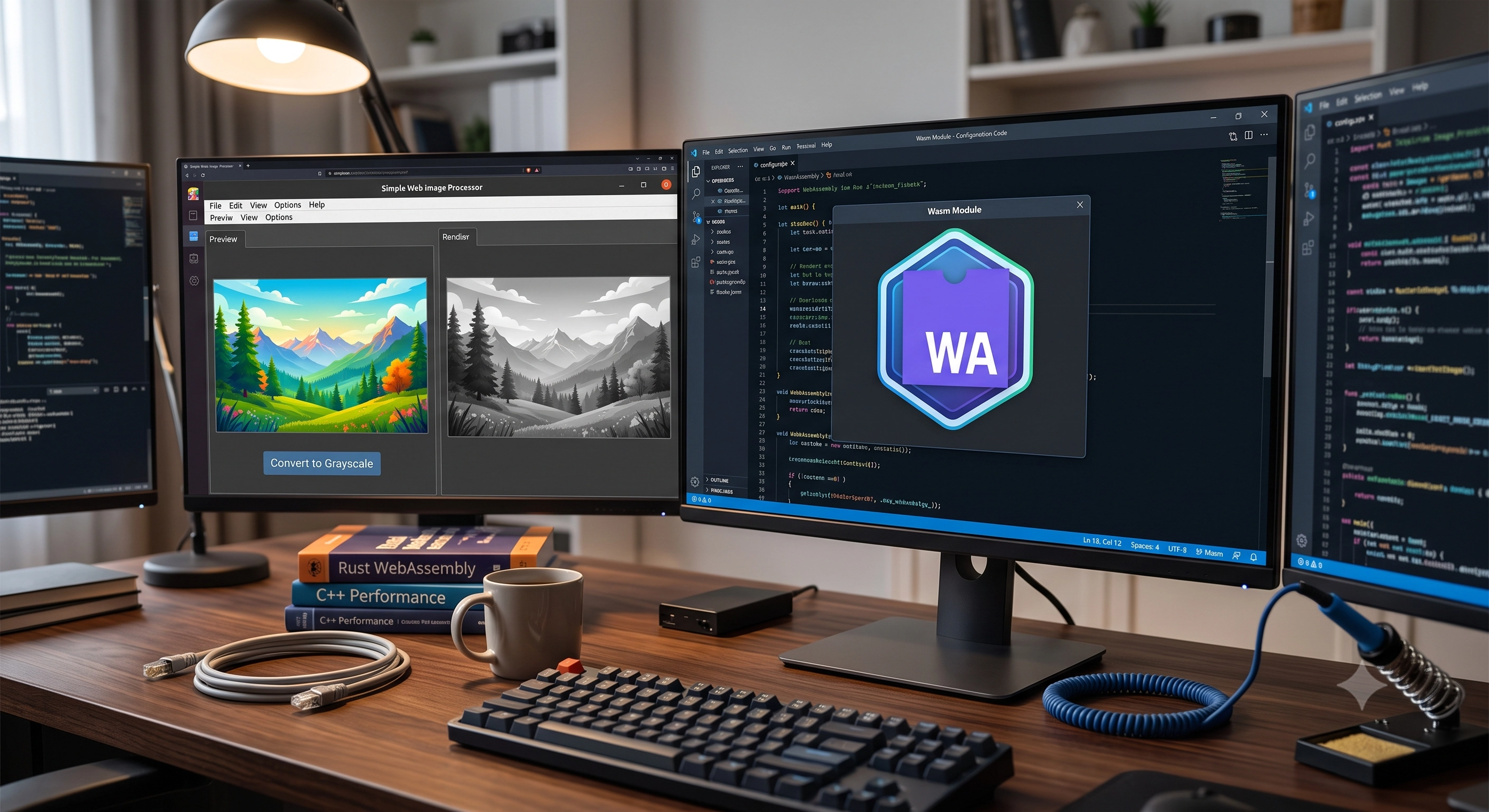
The Web’s New Speed Demon: WebAssembly (Wasm)
For decades, JavaScript has been the undisputed king of client-side web development. It brought interactivity and dynamic experiences to our browsers. However, as web applications grew more complex and demanded higher performance, JavaScript sometimes hit its limits. This is where WebAssembly, or Wasm, steps in – a groundbreaking technology designed to bring near-native performance to the web, opening up a world of possibilities far beyond what was once imaginable.
What Problem Does Wasm Solve?
While JavaScript is incredibly versatile, it wasn't originally designed for compute-intensive tasks like advanced gaming, video editing, CAD applications, or complex scientific simulations directly in the browser. These applications typically require the raw speed and memory control that compiled languages like C++, Rust, or Go offer. Before Wasm, running such code on the web was challenging, often requiring clunky plugins or server-side processing.
How Does WebAssembly Work?
At its core, WebAssembly is a binary instruction format for a stack-based virtual machine. Think of it as a highly efficient, low-level bytecode that modern web browsers can execute very quickly. Developers can write code in languages like C, C++, Rust, Go, or even C# and then compile it into a Wasm module. This module can then be loaded and run in a web browser alongside JavaScript.
- Binary Format: Wasm modules are small, compact, and fast to load because they are pre-compiled into a binary format.
- Virtual Machine: Browsers contain a Wasm runtime (virtual machine) that executes this binary code with near-native speed, much faster than a typical JavaScript engine can interpret human-readable JavaScript code.
- JavaScript Interoperability: Wasm isn't meant to replace JavaScript but to complement it. JavaScript can call Wasm functions, and Wasm can call JavaScript functions, allowing them to work together seamlessly.
Key Benefits of WebAssembly
The introduction of Wasm brings several significant advantages:
- Performance: This is Wasm's biggest selling point. It enables web applications to run at speeds comparable to desktop applications, making high-performance tasks feasible directly in the browser.
- Language Agnostic: Developers aren't limited to JavaScript. They can leverage existing codebases written in other languages and bring them to the web, significantly reducing development time and effort.
- Security: Wasm runs in a sandboxed environment within the browser, providing the same security guarantees as JavaScript. It doesn't have direct access to the user's system, ensuring safety.
- Portability: A Wasm module compiled once can run across different browsers and operating systems, as long as they have a compatible Wasm runtime.
Beyond the Browser: Wasm Everywhere
While born for the web, WebAssembly's efficiency and portability have led to its adoption in new frontiers. The concept of Wasm outside the browser (Wasmtime, WASI - WebAssembly System Interface) is gaining traction. This allows Wasm modules to run on servers, edge devices, IoT gadgets, and even as plugins for other applications, offering a lightweight, secure, and fast alternative to containers or other microservice technologies.
Imagine running a small, high-performance service on a server that's compiled to Wasm, offering faster startup times and lower resource consumption than traditional containerized applications. This potential is exciting developers and cloud providers alike.
Wasm and JavaScript: A Powerful Partnership
It's important to reiterate that Wasm is not a JavaScript killer. Instead, they form a powerful alliance. JavaScript remains excellent for UI manipulation, DOM access, and general application logic. Wasm excels at number-crunching, heavy computation, and porting existing complex libraries. Together, they create richer, faster, and more capable web experiences.
"WebAssembly has the potential to become the third core language of the web, alongside HTML and CSS." - Lin Clark, Mozilla
Key Takeaways
- WebAssembly (Wasm) is a binary instruction format that allows near-native performance for web applications.
- It enables languages like C++, Rust, and Go to run efficiently in the browser.
- Wasm complements JavaScript, allowing developers to build high-performance parts of their web apps in different languages.
- Beyond the browser, Wasm is expanding to server-side, IoT, and edge computing for lightweight, secure, and fast execution.
- This technology is revolutionizing how we build complex web applications and pushing the boundaries of what the web can do.
Be the first to leave a comment.
Leave a comment